
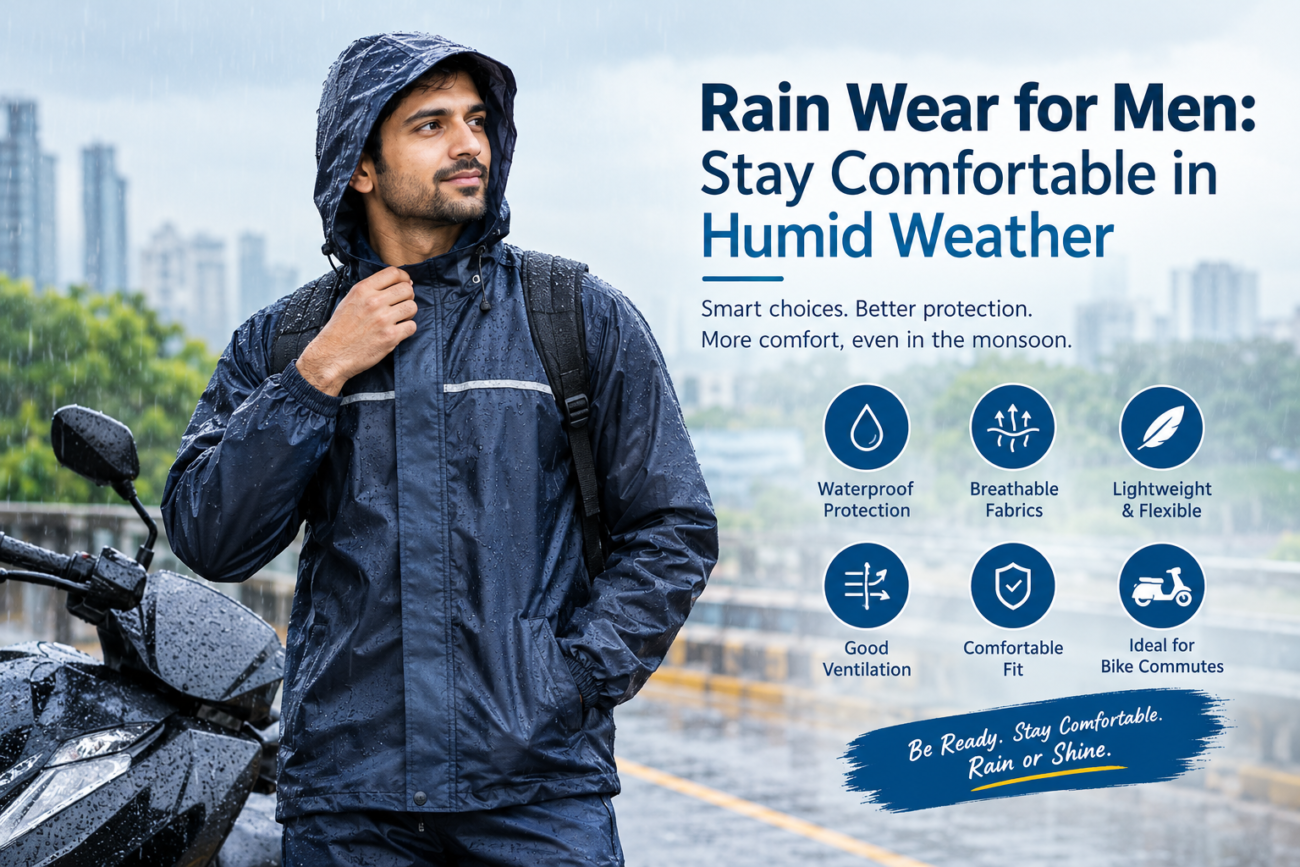
Why Is Comfortable Rain Wear Important During India’s Humid Monsoon?
India’s monsoon season brings much-needed relief from summer heat, but it also creates challenging weather conditions. High humidity, sudden downpours, waterlogged roads, and warm temperatures can make everyday travel uncomfortable. For men who commute to work, ride two-wheelers, travel by public transport, or enjoy outdoor activities, choosing the right rainwear is essential.
A raincoat should protect you from rain without making you feel excessively hot or sweaty. Poorly designed rainwear can trap body heat and moisture, especially during long commutes in crowded areas. The right combination of waterproof protection, ventilation, a comfortable fit, and lightweight construction can make a significant difference.
For Indian weather conditions, Rain Wear for Men should offer practical protection while remaining comfortable enough for regular use. Whether you are travelling through Mumbai’s heavy monsoon showers or navigating unpredictable rainfall in Bengaluru, Pune, or Delhi, the right rainwear helps you stay prepared.
How Can You Choose Rain Wear for Men That Feels Comfortable?
Choosing rainwear involves more than checking whether the material is waterproof. Consider how frequently you travel, how long you remain outdoors, and whether you need protection while riding a bike or walking.
1. Choose Lightweight and Flexible Materials
Heavy raincoats can feel uncomfortable when temperatures and humidity levels are high. Lightweight rainwear is easier to wear for extended periods and allows greater freedom of movement.
Look for a raincoat that is easy to put on, comfortable around the shoulders, and flexible enough for everyday activities. If you regularly travel to work, a lightweight design is also easier to fold and carry when the weather changes.
2. Look for Ventilation and Breathability
Breathability is particularly important during India’s humid monsoon. Although a completely waterproof outer layer helps prevent rainwater from entering, it can also restrict the escape of body heat and perspiration.
Choose rainwear with ventilation features where possible, such as back vents, underarm openings designed to resist rain entry, or breathable fabric construction. These features can improve airflow and reduce the uncomfortable feeling of trapped heat.
Remember that waterproof and breathable are not the same thing. A good raincoat balances both properties according to your travel needs.
3. Select a Comfortable Fit
A raincoat that fits too tightly may restrict movement and trap heat. One that is excessively loose can flap in strong winds or interfere with comfortable riding.
Choose a size that provides enough room for your regular clothing without making the raincoat difficult to manage. Adjustable cuffs, a well-designed hood, and secure closures can help improve comfort during changing weather conditions.
How Can You Stay Cool While Wearing a Waterproof Raincoat?
Even the best raincoat cannot completely prevent sweating in hot, humid conditions. However, a few practical habits can help you feel more comfortable.
Wear Lightweight Clothing Underneath
Choose cotton or moisture-managing clothing according to your activity level. Lightweight, comfortable clothing can reduce discomfort when temperatures are high. If you sweat heavily during cycling or walking, moisture-wicking inner layers may help move perspiration away from your skin.
Avoid wearing several thick layers unless the temperature requires them. In most warm Indian monsoon conditions, a simple, lightweight outfit beneath your rainwear is sufficient.
Remove Your Raincoat When You Reach a Dry Place
If you reach your office, college, shop, or home and no longer need rain protection, remove your raincoat when practical. This allows accumulated heat and moisture to escape.
Hang it in a well-ventilated area to dry instead of leaving it folded inside a bag. Drying your rainwear properly also helps prevent unpleasant odours.
Avoid Unnecessary Physical Exertion
Walking quickly through flooded streets or carrying heavy bags while wearing rainwear can increase body heat. Allow extra travel time during heavy rainfall and take short breaks when needed, particularly during long outdoor journeys.
What Features Should You Look for in Rainwear for Bike Commuting?
Two-wheeler riders need additional protection because they are exposed to wind-driven rain, road spray, and splashes from passing vehicles.
A suitable raincoat should provide enough coverage to protect your torso and arms while allowing unrestricted movement. A rain suit with separate trousers can be useful during heavy showers, especially when travelling longer distances.
Look for the following features:
- Secure closures: Zippers, storm flaps, or covered fasteners help reduce water entry.
- Adjustable hood or collar: A well-designed hood or high collar can protect the neck and head, provided it does not restrict visibility.
- Reflective details: These can improve visibility in poor weather and low-light conditions.
- Durable construction: Strong seams and quality closures are useful for frequent use.
- Easy storage: Compact rainwear is convenient to keep in a backpack or scooter storage compartment.
Safety should always come first. Avoid hoods or collars that obstruct peripheral vision, and never allow loose fabric to interfere with the motorcycle’s controls or moving parts. A raincoat also does not replace a properly fastened helmet or suitable riding gear.
How Can You Keep Rain Wear Fresh and Comfortable Throughout the Monsoon?
Regular maintenance helps rainwear remain comfortable and perform well throughout the season. Sweat, dust, road pollution, and moisture can accumulate after repeated use.
Follow these simple care practices:
- Air-dry after every use: Hang your raincoat in a shaded, ventilated area.
- Clean it regularly: Follow the manufacturer’s washing instructions and use a suitable mild cleaning method.
- Avoid excessive heat: Do not use a hot iron or place the raincoat near a direct heat source unless the care label specifically permits it.
- Check seams and closures: Inspect zippers, buttons, and stitched areas for wear or damage.
- Store it only when dry: Keeping damp rainwear folded for long periods can encourage unpleasant smells and may affect the material.
Do not assume every waterproof fabric can be washed in the same way. Following the product’s care instructions helps protect its finish and extend its useful life.
Can Stylish Rainwear Also Be Practical for Everyday Use?
Yes. Modern rainwear can combine functionality with a clean, attractive appearance. Men who travel to offices, attend college, visit clients, or run daily errands may prefer designs that look neat without compromising rain protection.
Choose colours and styles that suit your regular wardrobe. Neutral shades can work well for professional settings, while brighter colours may improve visibility in rainy conditions. A streamlined raincoat that is easy to wear over everyday clothing is often more useful than a bulky design reserved for occasional use.
When comparing products marketed as the best quality raincoat for men, look beyond appearance. Consider waterproof performance, stitching, material quality, fit, comfort, and suitability for your typical journey. These practical features are more important than choosing a raincoat based on style alone.
What Should Families Consider When Choosing Rainwear for Kids?
Children need rainwear that protects them from rain while allowing comfortable movement during school journeys, outdoor play, and family outings.
Choose lightweight designs with child-friendly closures and a suitable fit. Avoid excessively long or loose garments that could cause tripping or interfere with movement. For school commutes, consider easy-to-wear raincoats or rain suits that provide adequate coverage for the expected weather.
Parents should also ensure that hoods do not obstruct a child’s vision and that wet rainwear is dried properly after use. For younger children, adult supervision is important when walking near traffic or playing outdoors during heavy rainfall.
How Can You Choose the Right Rainwear for India’s Changing Weather?
India’s monsoon conditions vary across regions. Coastal cities such as Mumbai often experience prolonged humidity and heavy showers, while other locations may see short, intense downpours followed by warm, sunny periods. Hill destinations can bring cooler temperatures and stronger winds.
Consider your local conditions before buying rainwear. Daily urban commuters may prioritise lightweight construction, convenient storage, and quick-drying care. People travelling long distances or spending hours outdoors may need more extensive coverage and durable construction.
Rather than choosing a raincoat only for the heaviest rainfall, think about how it will perform throughout your typical day. A practical combination of water resistance, coverage, comfort, and easy maintenance makes rainwear more useful across the season.
Conclusion: Stay Comfortable and Prepared with Real Rainwear
Staying comfortable during India’s humid monsoon requires rainwear that does more than keep water out. Lightweight materials, ventilation, a comfortable fit, suitable coverage, and regular maintenance can help reduce discomfort during daily travel and outdoor activities.
When searching for the best rainwear in India, choose products that match your climate, commute, and lifestyle. Real Rainwear offers rainwear options for men, women, and kids, helping families prepare for everyday monsoon conditions.
Whether you are commuting to work, riding a two-wheeler, travelling around the city, or enjoying an outdoor adventure, choosing the right rainwear can make rainy days easier to manage. Stay prepared, care for your raincoat properly, and make comfort a priority throughout the monsoon season.