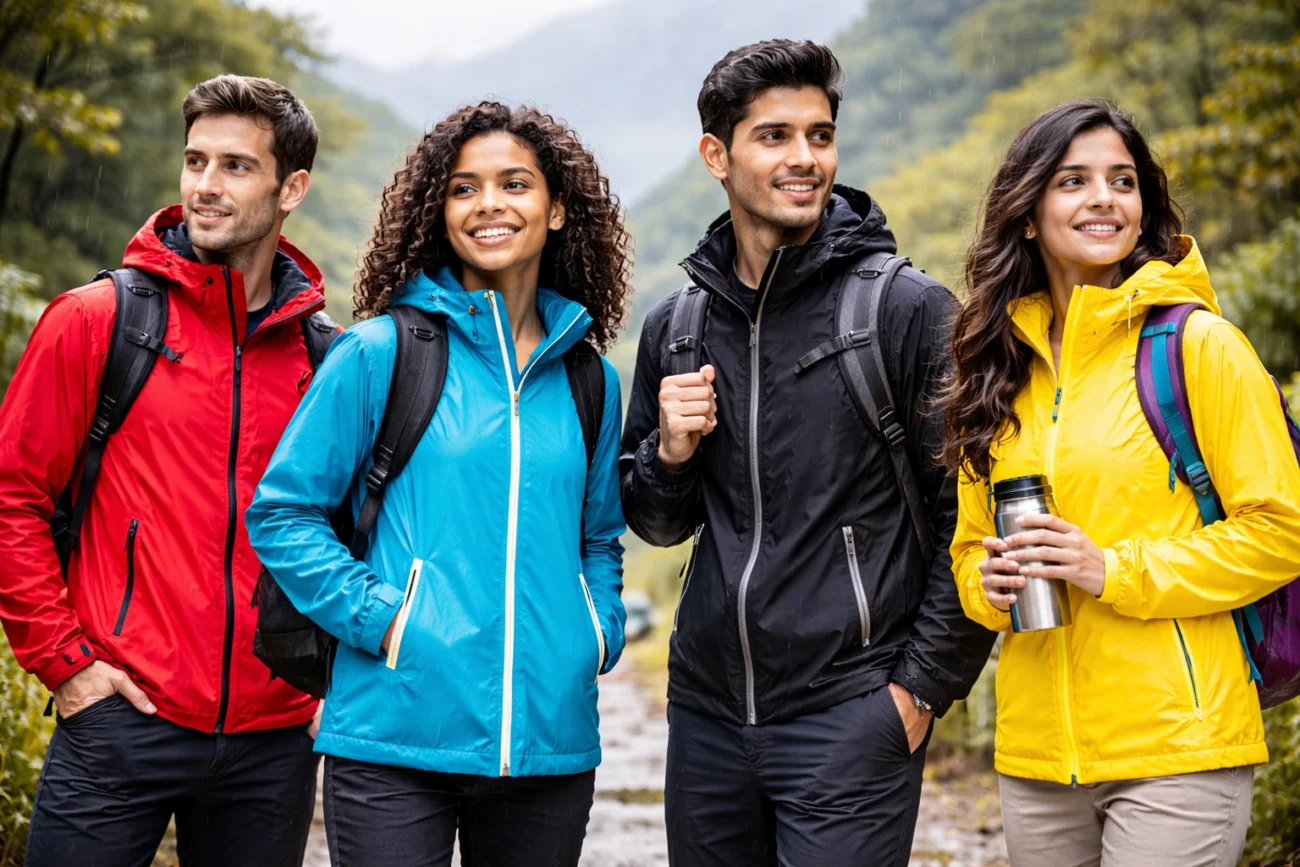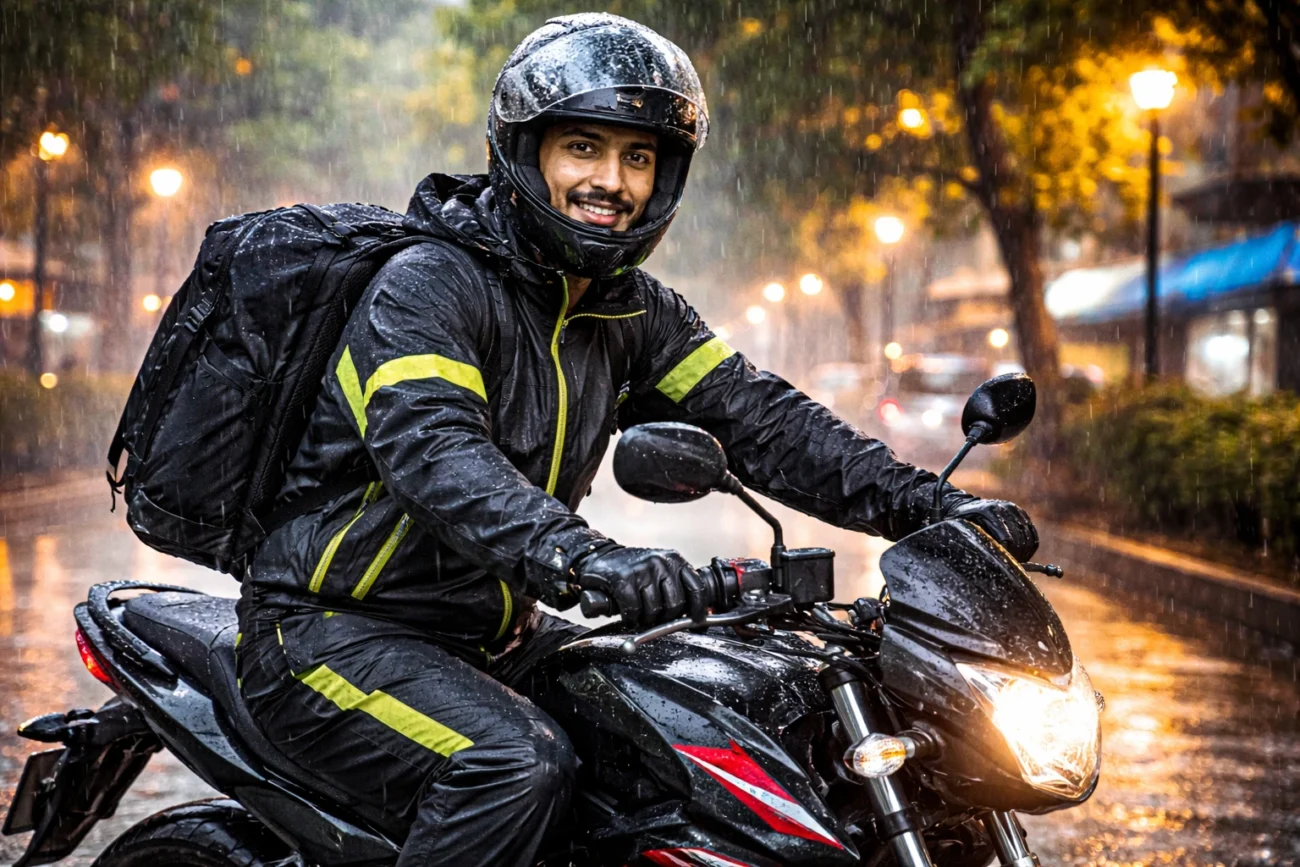
Raincoat for bikers represents far more than simple rain protection-it’s essential safety equipment that can mean the difference between a safe commute and a dangerous situation on India’s busy roads. With over 210 million two-wheelers registered across the country in 2026 and millions of Indians relying on motorcycles and scooters for daily transportation, the need for specialized rain gear has never been more critical. At Real Rainwear, we understand that bikers face unique challenges during monsoon season that generic raincoats simply cannot address effectively.
Raincoat for bikers must balance multiple competing demands: complete waterproofing without compromising visibility, adequate coverage without restricting movement, and durability that withstands high-speed wind without adding dangerous bulk. The Indian Meteorological Department reports that 2026 has seen increasingly unpredictable rainfall patterns across the country, with sudden downpours occurring even during traditionally dry months. This unpredictability means that daily riders need reliable rain protection available at all times, not just during designated monsoon seasons.
Real Rainwear has spent years researching the specific needs of Indian bikers, from delivery professionals covering hundreds of kilometers daily to office commuters navigating congested urban traffic. This comprehensive guide draws on that expertise to help you select raincoat for bikers that keeps you safe, dry, and comfortable regardless of weather conditions. Whether you ride a high-powered motorcycle or a practical scooter, understanding the critical features of biker-specific rain gear ensures you make an informed investment in your safety and comfort.
Why Do Bikers Need Specialized Raincoats in 2026?
Raincoat for bikers differs fundamentally from general-purpose rain gear due to the unique demands of two-wheeler operation. Unlike pedestrians or car passengers, bikers face rain driven horizontally by wind at speeds ranging from 40 to 100+ km/h, creating penetration forces that overwhelm ordinary raincoats within minutes of exposure.
The riding position on motorcycles and scooters exposes specific body areas to concentrated water intrusion. Standard raincoats leave critical gaps at the neck, wrists, and lower back-areas particularly vulnerable when leaning forward over handlebars. Raincoat for bikers incorporates extended coverage in these high-risk zones, with longer backs that prevent riding posture from exposing the lower spine, and elasticized or adjustable cuffs that seal tightly around wrists without restricting throttle and brake control.
Safety considerations make specialized raincoat for bikers non-negotiable for responsible riders. According to the Ministry of Road Transport and Highways’ 2025 data, two-wheeler accidents increase by 47% during rainy conditions compared to dry weather. Reduced visibility, slippery road surfaces, and impaired vehicle control create a perfect storm of risk factors. Raincoat for bikers addresses these challenges through reflective elements for visibility, designs that don’t interfere with control inputs, and materials that maintain protective function without creating hazardous flapping or billowing at speed.
Comfort during extended rides separates quality raincoat for bikers from inadequate alternatives. Professional delivery riders, food couriers, and taxi drivers often spend 8-12 hours daily on two-wheelers, making breathability and moisture management crucial. At Real Rainwear, our biker-focused designs incorporate ventilation systems that prevent the suffocating sensation common with fully sealed rain gear, allowing riders to remain productive and comfortable throughout their workday regardless of weather conditions.
What Features Define the Best Raincoat for Bikers?
Raincoat for bikers must incorporate specific design elements that address the unique challenges of two-wheeler operation. Understanding these features helps riders identify products engineered for their needs rather than generic rain gear marketed toward bikers without appropriate functionality.
Extended Back Panel: The most distinctive feature of proper raincoat for bikers is an extended rear section, typically 8-12 inches longer than the front. This compensates for the forward-leaning riding position that exposes the lower back and waist on standard-length raincoats. Quality designs include elastic bands or adjustable drawstrings that allow riders to customize the fit, preventing excess fabric from billowing while ensuring complete coverage.
High Collar and Hood Design: Raincoat for bikers requires specially designed high collars that seal against the neck without restricting head movement needed for traffic awareness. Hoods must fit over or accommodate helmets-a critical safety requirement since removing helmets during rain violates traffic laws and compromises protection. Look for hoods with adjustable toggles that secure firmly without obscuring peripheral vision or creating wind resistance that pulls backward at speed.
Reinforced Seat Area: The constant friction between rider and seat rapidly wears through ordinary raincoat materials. Quality raincoat for bikers features reinforced seat panels using extra-thick fabric or additional protective layers that resist abrasion and maintain waterproofing despite continuous contact. This seemingly minor detail dramatically extends the garment’s functional lifespan for regular riders.
Wrist and Ankle Closures: Water intrusion at extremities ruins the protection provided by even the best raincoat for bikers. Elasticized cuffs with adjustable velcro or snap closures seal wrists completely while allowing sufficient room to comfortably operate controls without restricting blood flow. Similarly, ankle zippers or adjustable straps on full-length designs prevent water from traveling up legs during riding, keeping both rider and vehicle seat dry.
High-Visibility Elements: Raincoat for bikers must enhance visibility during the reduced-light conditions that accompany rain. Strategically placed reflective strips-across shoulders, down arms, across the back, and along sides-catch vehicle headlights from multiple angles, making riders visible from considerable distances. Some premium designs incorporate fluorescent yellow or orange panels that remain highly visible even during daytime rain when ambient light is reduced.
Strategic Ventilation: Without proper airflow, raincoat for bikers becomes a mobile sauna, especially in India’s humid climate. Look for designs with underarm vents, back ventilation panels, or breathable fabric inserts that allow body heat and moisture to escape while blocking external water. This ventilation significantly improves comfort during extended rides without compromising waterproof protection.
How Should Raincoat for Bikers Fit for Optimal Safety?
Raincoat for bikers requires careful fitting considerations that differ from standard clothing or even general rain gear. Proper fit directly impacts both safety and protection effectiveness, making it worth investing time to get right rather than settling for approximately correct sizing.
When trying raincoat for bikers, wear your typical riding gear including any jacket or protective equipment you normally use. The raincoat must fit comfortably over these layers without being so tight that it restricts movement or so loose that excess fabric creates dangerous flapping or gets caught in moving parts. Sit in your riding position with arms extended as if holding handlebars-the sleeves should remain long enough to cover wrists completely without pulling back, and the body shouldn’t ride up exposing your back or waist.
Sleeve length in raincoat for bikers is particularly critical and often requires more generous sizing than you might initially expect. When arms extend forward to handlebars, sleeves naturally pull back several inches. Quality raincoat for bikers includes extra sleeve length to account for this, and some designs feature articulated or pre-curved sleeves that follow the natural arm position during riding, reducing pull-back while eliminating excess fabric at the elbows when arms are relaxed.
The shoulder area on raincoat for bikers must allow full range of motion for head checks and emergency maneuvers. Test this by turning your head fully to each side, checking blind spots, and reaching for mirrors. Any binding or restriction indicates sizing is too small or the cut isn’t appropriate for riding, potentially compromising your ability to respond quickly in traffic situations.
Length considerations vary based on your riding style and vehicle type. Raincoat for bikers used on sport bikes with aggressive forward-leaning positions need more dramatic front-to-back length differences, while scooter riders can use more balanced lengths. The rear should extend at least to mid-thigh when standing, providing adequate coverage even when bent forward in riding position. Test this by simulating your riding posture and having someone check for exposed areas at your lower back and upper legs.
Which Material Technologies Work Best for Raincoat for Bikers?
Raincoat for bikers must use materials capable of withstanding unique stresses that don’t affect pedestrian rain gear. High-speed wind, prolonged exposure, abrasion from riding positions, and the need for breathability in hot, humid conditions all influence material selection for motorcycle-specific designs.
PVC-coated nylon represents the most common choice for raincoat for bikers, offering excellent waterproofing at reasonable prices. The nylon base provides tear resistance and flexibility, while PVC coating creates an impermeable barrier against water. However, PVC lacks breathability, which can be uncomfortable during long rides in warm weather. This material works well for riders prioritizing affordability and waterproof protection for relatively short commutes.
Polyester with polyurethane (PU) coating balances waterproofing with improved breathability compared to PVC. Raincoat for bikers using quality PU-coated polyester provides comfortable protection for extended rides while maintaining durability adequate for regular use. The breathability helps manage internal moisture buildup that occurs during physical exertion or in humid conditions, though it doesn’t match the ventilation capabilities of more advanced membrane technologies.
Gore-Tex and similar breathable waterproof membranes represent premium options for raincoat for bikers, particularly valuable for professional riders or enthusiasts covering significant distances. These materials allow water vapor from perspiration to escape while blocking liquid water from entering, dramatically improving comfort during long rides. The primary drawback is higher cost, though serious riders often find the investment justified by enhanced comfort and longer product lifespan.
Hybrid construction combines different materials to optimize specific zones in raincoat for bikers. Designers might use highly waterproof, abrasion-resistant material in high-wear areas like shoulders and seat, while incorporating more breathable fabrics in the back or underarms where ventilation matters more than extreme durability. This approach maximizes performance while managing costs more effectively than using premium materials throughout.
Thickness matters significantly in raincoat for bikers, with heavier fabrics (typically 0.35mm to 0.5mm) providing better durability and wind resistance but adding bulk and reducing packability. Lighter materials (0.25mm to 0.35mm) pack smaller and feel less restrictive but may not withstand the abrasion and stress of daily riding as effectively. Consider your usage pattern when evaluating this trade-off-occasional riders can prioritize packability, while daily commuters should emphasize durability.
What Style Options Exist for Male and Female Bikers?
Raincoat for bikers comes in distinct designs for men and women that account for body proportion differences and specific fit requirements. Choosing gender-appropriate options ensures proper coverage, comfort, and safety rather than settling for unisex designs that compromise on fit.
Men’s raincoat for bikers typically features broader shoulders, longer torsos, and straighter cuts that accommodate masculine body shapes without excess fabric bunching or restrictive pulling. Real Rainwear’s men’s collection includes designs specifically engineered for male riders, with extended back panels, reinforced seating areas, and sizing that accounts for the average height and build of Indian male riders. These designs ensure protection without the fitting issues that occur when men try to use women’s or unisex raincoats.
Women’s raincoat for bikers incorporates shaped waists, higher armholes, and adjusted proportions that fit feminine body types properly. Without these considerations, raincoats pull uncomfortably across the chest, bunch at the waist, or create gaps at the hips that allow water intrusion. The women’s raincoat section at Real Rainwear offers designs that maintain full technical performance while accommodating female body shapes, ensuring women riders don’t have to choose between proper fit and adequate protection.
One-piece versus two-piece designs represent another significant style consideration for raincoat for bikers. Full-body single-piece designs (often called rain suits) provide the most comprehensive coverage with no gaps at the waist where jacket and pants meet. However, they’re less convenient for quick on-and-off use during intermittent rain. Two-piece options offer more flexibility-riders can use just the jacket for light rain or add pants when needed-though ensuring proper overlap at the waist requires attention to sizing.
Color and visibility features in raincoat for bikers affect both safety and personal preference. While bright colors like fluorescent yellow or orange maximize visibility, many riders prefer more subtle options for aesthetic reasons or professional appearance. Quality raincoat for bikers balances these considerations by offering darker base colors with strategically placed reflective elements that maintain safety without overwhelming the design. Black or dark gray raincoats with prominent reflective strips satisfy both preferences effectively.
How Do Weather Conditions in India Affect Raincoat Selection?
Raincoat for bikers used in India must address specific climate characteristics that differ from temperate regions where many rain gear designs originate. Understanding these regional factors helps riders select products optimized for actual conditions they’ll encounter rather than generic international designs.
India’s monsoon seasons bring not just rain but sustained high humidity that challenges rider comfort even with good rain protection. Raincoat for bikers operating in these conditions must prioritize breathability and ventilation more than would be necessary in drier climates. Without adequate air circulation, riders can become soaked from internal perspiration despite remaining externally dry, defeating the purpose of rain protection entirely.
Temperature ranges during Indian rainy seasons typically remain quite warm, unlike the cold autumn or spring rains common in many countries. This means raincoat for bikers rarely needs insulation or thermal properties-in fact, added warmth usually creates discomfort. Lightweight, single-layer designs with good ventilation perform better in Indian conditions than the insulated or multi-layer options appropriate for colder climates.
Sudden, intense downpours characterize Indian monsoon patterns, with rainfall rates occasionally exceeding 100mm per hour during peak storms. Raincoat for bikers must handle these extreme conditions, not just light drizzle. This requires genuinely waterproof materials (not merely water-resistant), fully sealed seams, and designs that prevent water from pooling in any areas where it might eventually seep through.
Dust and pollution during India’s dry seasons affect raincoat maintenance requirements. When rains finally arrive, they often wash accumulated dust and grime from the air, creating dirty water that stains and degrades rain gear more quickly than clean rain. Raincoat for bikers used in Indian cities should feature materials that clean easily and resist staining, with dark colors or patterns that hide the inevitable discoloration that occurs over time.
Regional variations across India mean optimal raincoat for bikers differs by location. Riders in consistently wet areas like Kerala or the northeast require maximum waterproofing with less concern for packability, while those in regions with sporadic rainfall might prioritize lightweight, easily stored options. Urban riders face different challenges than rural riders, with city traffic creating stop-and-go patterns that cause more heat buildup compared to continuous highway riding.
What Maintenance Practices Extend Raincoat Lifespan?
Raincoat for bikers represents a significant investment that properly maintained can provide years of reliable service. However, the harsh conditions these garments endure-high-speed wind stress, continuous abrasion, exposure to road grime and vehicle exhaust-require diligent care to maintain protective capabilities.
After each use, hang raincoat for bikers in a well-ventilated area to dry completely before storage. Never fold or pack away damp rain gear, as trapped moisture promotes mildew growth that permanently damages materials and creates unpleasant odors difficult to eliminate. If your raincoat becomes soaked through (from perspiration or water intrusion), turn it inside-out during drying to ensure both surfaces dry completely.
Regular cleaning removes road grime, exhaust residue, and body oils that degrade waterproof coatings over time. Most raincoat for bikers can be hand-washed with mild soap and cool water, though some materials tolerate gentle machine washing. Avoid harsh detergents, bleach, or fabric softeners, as these chemicals break down waterproof treatments and damage synthetic materials. Pay particular attention to collar areas and cuffs where skin contact deposits oils that accumulate over time.
Waterproofing treatments require periodic renewal to maintain effectiveness. When you notice water soaking into the outer fabric rather than beading and rolling off, reapply DWR (Durable Water Repellent) treatment using spray-on or wash-in products designed for technical outerwear. This simple maintenance step, performed once or twice annually depending on usage frequency, dramatically extends the functional life of raincoat for bikers.
Inspect your raincoat for bikers regularly for damage, particularly in high-stress areas like shoulders, elbows, and seating surfaces. Small tears or separating seams can be repaired promptly using specialized waterproof repair tape or seam sealer, preventing minor issues from progressing to major failures. These repair supplies are inexpensive and simple to use, often extending raincoat life by several seasons when applied at the first sign of wear.
Storage conditions significantly impact raincoat for bikers longevity. Store in cool, dry locations away from direct sunlight, which degrades synthetic materials and waterproof coatings over time. Avoid cramming into tight spaces that create permanent creases or folds-these become weak points where water can eventually penetrate. Hanging on padded hangers helps raincoats maintain their shape while preventing stress on seams and zippers.
Where Should You Purchase Quality Raincoat for Bikers?
Raincoat for bikers varies dramatically in quality across retail channels, and choosing the right source ensures you receive products genuinely engineered for riding rather than generic rain gear marketed toward bikers. Understanding your purchasing options helps identify retailers offering legitimate motorcycle-specific protection.
Specialized motorcycle gear retailers typically offer the most appropriate raincoat for bikers selection, staffed by knowledgeable salespeople who understand riding requirements and can guide proper fitting. These retailers stock products specifically designed for two-wheeler use rather than adapted from general-purpose rain gear. The primary drawback is often higher prices reflecting specialized inventory and expertise, though the assurance of appropriate products justifies the cost for serious riders.
Online platforms provide convenience and often more competitive pricing for raincoat for bikers, with extensive customer reviews offering insights into real-world performance. When purchasing online, carefully study size charts, material specifications, and return policies before ordering. Look for detailed product descriptions that specifically address motorcycle use rather than vague claims about “sports” or “outdoor” applications.
General sporting goods stores sometimes carry raincoat for bikers, though selection tends toward entry-level options rather than specialized high-performance gear. These retailers work well for casual riders seeking basic protection on a budget but may not stock the specific features professional or frequent riders require. Examine products carefully to verify they include biker-specific design elements rather than standard rain jackets with motorcycle imagery on the packaging.
Direct manufacturer websites often offer the best selection and most competitive pricing for raincoat for bikers, along with detailed specifications and fitting guides. Purchasing directly eliminates retailer markups while ensuring access to complete product lines rather than the limited selection physical stores can stock. Many manufacturers provide customer service support to help with sizing questions or product selection based on your specific riding needs and conditions.
How Much Should You Expect to Invest in Raincoat for Bikers?
Raincoat for bikers spans a wide price spectrum, and understanding what different price points deliver helps riders make informed investments that match their needs and usage patterns. Spending more doesn’t always equate to better value, but extreme budget options often prove false economy when they fail during critical situations.
Entry-level raincoat for bikers typically ranges from ₹800 to ₹2,500, offering basic waterproof protection using simple PVC or vinyl materials. These options work adequately for occasional riders who need emergency rain protection but don’t ride regularly during monsoons. Expect limited durability, minimal breathability, and basic features without the specialized design elements that enhance safety and comfort. For riders who encounter rain only occasionally, these budget options provide functional protection without significant financial commitment.
Mid-range raincoat for bikers, priced between ₹2,500 and ₹6,000, represents the value sweet spot for regular commuters and frequent riders. This category typically includes decent waterproof/breathable materials, biker-specific design features like extended backs and reinforced seating, and adequate durability for daily use through multiple monsoon seasons. Most Indian riders find optimal value in this range, receiving reliable protection without premium pricing for features they may not utilize.
Premium raincoat for bikers costs ₹6,000 to ₹15,000+, justifying higher prices through superior materials (often including Gore-Tex or similar membranes), exceptional durability, advanced features, and refined designs that maximize comfort during extended rides. Professional delivery riders, long-distance tourers, and serious motorcycle enthusiasts benefit most from these investments, as the enhanced performance and longevity justify premium costs. Casual riders rarely need this level of performance, making premium options unnecessary expenditures for many buyers.
Consider cost-per-use when evaluating raincoat for bikers investments. A ₹5,000 raincoat used daily for two years costs roughly ₹7 per ride, while a ₹1,500 option that lasts one season and provides inferior protection offers worse value despite the lower initial price. Factor in potential costs from getting soaked-damaged smartphone, ruined clothing, illness from cold and wet exposure-and quality rain gear proves economical even with higher upfront costs.
Frequently Asked Questions
Q: Can I use regular raincoats for motorcycle riding, or do I specifically need raincoat for bikers?
A: Regular raincoats are not recommended for motorcycle riding. They lack the extended back coverage, reinforced seating, proper sleeve length, and secure closures that prevent dangerous flapping at speed. Biker-specific raincoats are engineered for riding positions and high-speed wind, making them significantly safer and more effective.
Q: How do I prevent my raincoat from flapping and creating wind resistance while riding?
A: Choose raincoat for bikers with adjustable waist straps or elastic bands that secure the garment close to your body. Ensure proper sizing-overly large raincoats create more flapping. Some riders add additional velcro strips or use bungee cords around the waist for extra security at highway speeds.
Q: What should I do if my raincoat for bikers starts leaking at the seams?
A: Apply waterproof seam sealer to the affected areas, available at outdoor/sporting goods stores or online. Clean the seam thoroughly, let it dry completely, then apply sealer according to product instructions. For extensive seam failure, professional repair or replacement may be more cost-effective than attempting DIY fixes.
Q: Is it safe to wear a poncho-style raincoat while riding a motorcycle?
A: Ponchos are generally not recommended for motorcycle riding as they create excessive billowing, obstruct vision, and can get caught in wheels or moving parts. Fitted raincoat for bikers with secure closures provides much safer protection. If you must use a poncho, keep speeds very low and secure all loose fabric carefully.
Q: How often should I replace my raincoat for bikers?
A: Replace when you notice persistent leaking that repairs don’t fix, significant material degradation (cracks, tears, excessive wear), or when waterproof treatments no longer respond to reapplication. With proper care, quality raincoat for bikers should last 3-5 years of regular use, or longer for occasional riders.
Q: Do I need different raincoats for different types of motorcycles or scooters?
A: Riding position determines raincoat requirements more than vehicle type. Sport bikes with aggressive forward-leaning positions need more dramatic front-to-back length differences, while upright scooter positions work with more balanced designs. Consider your specific riding posture rather than vehicle category when selecting raincoat for bikers.